







About Getting Over It
Few games have generated as much intense emotion and viral moments as Getting Over It with Bennett Foddy. This deceptively simple climbing game has pushed players to their limits, inspiring both frustration and incredible dedication from speedrunners aiming for world records.
What Is Getting Over It?
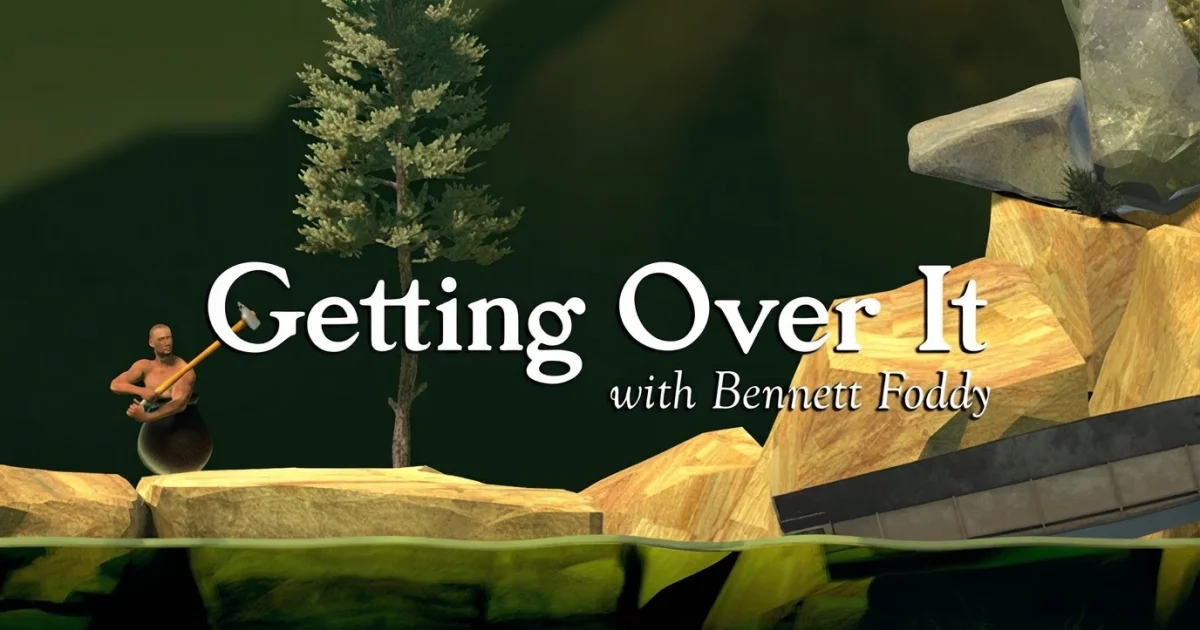
Getting Over It is a notoriously difficult physics-based climbing game, launched in 2017 by Bennett Foddy. You control a man named Diogenes, who is stuck in a metal pot and must ascend a bizarre mountain constructed from various objects, using only a sledgehammer. A single misstep can send you plummeting, undoing significant progress in an instant. For more details, see Getting Over It with Bennett Foddy – Wikipedia.
Inspired by Jazzuo’s 2002 game Sexy Hiking, Bennett Foddy designed this experience as both a tribute and an exploration of failure, persistence, and the nature of challenging games. As you attempt your climb, Foddy himself offers philosophical commentary on frustration and human endurance, creating a surprisingly reflective atmosphere amidst the chaos.
The game quickly gained popularity on streaming platforms and YouTube, where viewers enjoyed watching content creators react to its brutal difficulty. It’s available on PC, Android via the Google Play Store, iOS through the App Store, and as a free browser version playable online instantly with no download required.
How to Play Getting Over It
The real test is not just reaching the top, but maintaining your resolve to continue climbing. Every action demands precision and patience:
- Control the hammer entirely through your mouse movements.
- Strategically position the hammer to hook onto ledges, push off surfaces, or swing yourself upwards.
- Master the intricate physics system where momentum, angle, and timing dictate success or a disastrous fall.
- There are no checkpoints; a fall from near the summit means returning to the very beginning.
- Check the in-game leaderboard to see world record speedrun times and understand the game’s full potential.
The HTML5 version allows you to play online immediately in your browser, making it easy to jump in and test your limits without any commitment. Just be prepared for the challenge ahead.
Key Features of Getting Over It
Physics-Based Hammer Climbing
Unlike typical Platformer games with predictable jump mechanics, Getting Over It demands mastery of realistic physics. Each swing of the hammer responds to your mouse movements with unforgiving accuracy. You’ll learn to use the hammer’s claw to hook onto ledges, apply the flat side to push against objects, and generate momentum through careful positioning. The learning curve is steep, but truly mastering the hammer offers a deeply satisfying reward.
Bennett Foddy’s Philosophical Narration
As you ascend (and inevitably descend), Bennett Foddy’s voice provides commentary, sharing philosophical quotes, insights into game design, and reflections on failure. These aren’t random thoughts; they are carefully timed to either offer comfort during setbacks or challenge your perspective on the value of difficult games. Some players find it calming, while others find it adds to their frustration.
No Checkpoints, No Mercy
This feature is what makes Getting Over It infamous. There’s no save system, no safety net, and no forgiveness. You can spend hours reaching advanced sections of the mountain, make one small mistake, and watch helplessly as you tumble all the way back to the starting area. This constant threat of catastrophic loss creates the game’s intense emotional stakes, making it a true Adventure.
Speedrunning Community and World Records
Despite its difficulty, Getting Over It has fostered a dedicated speedrunning community. The in-game leaderboard showcases top times, with elite players completing the entire climb in under two minutes. Watching a speedrun after struggling for hours reveals the level of mastery possible; these runners make the impossible look effortless, employing advanced techniques like snake climbing and precise momentum manipulation.
Why Getting Over It Became a Viral Sensation
The game’s rise to fame was deliberate. Streamers and YouTube creators discovered that Getting Over It provided perfect content: it generated genuine, unscripted emotional reactions that captivated viewers. Watching someone lose hours of progress in seconds created shared moments of shock and empathy.
The meme culture surrounding the game exploded, with countless clips of rage quits, triumphant victories, and devastating falls circulating across social media. The game doesn’t aim to be fair; it aims to be meaningful.
Even figures outside gaming have recognized the game’s cultural footprint, with references appearing in unexpected places. The phrase “getting over it” itself became shorthand for any seemingly impossible challenge.
The Philosophy Behind the Frustration
Bennett Foddy didn’t create this game solely to torment players. Getting Over It is intentionally designed to evoke feelings of loss and to make players question whether continuing is worthwhile. In an era where most games guide players and celebrate every minor achievement, Foddy asks: what happens when a game disregards your feelings?
The narration directly addresses this, discussing how games used to be hard, how failure once carried significance, and how modern gaming has largely removed meaningful consequences. Regardless of whether you agree with this philosophy, the game undeniably provokes genuine emotion.
As one player noted, the game won’t tell you you’re special or that you can achieve anything. It simply waits to see if you will persist. This honesty is, for many, refreshing.
Is Getting Over It Rage-Inducing?
Absolutely, without a doubt, yes. Getting Over It is specifically crafted to test your patience and emotional resilience. The combination of precise physics, the absence of checkpoints, and the constant risk of losing significant progress creates a perfect storm of frustration. Videos of players expressing extreme reactions have millions of views for a clear reason.
However, this rage is an integral part of the experience. The game is transparent about its nature; Bennett Foddy is upfront about the challenge from the beginning. Many players report that pushing past the anger and accepting failure can become a meditative, almost zen-like process. Others simply cannot overcome the fury and quit after their first major setback. Both reactions are valid.
If you tend to react strongly to frustrating games, consider watching a YouTube playthrough instead of risking your hardware. But if you can channel that anger into determination, Getting Over It offers a uniquely cathartic experience.
What’s at the End of Getting Over It?
Without revealing too much, reaching the summit of Getting Over It rewards you with something unexpected and perfectly aligned with the game’s philosophy. You will discover a special area accessible only to those who complete the climb, along with a final message from Bennett Foddy himself.
The ending has sparked numerous discussions about its meaning. Some find it profound, others consider it anticlimactic, and many believe it perfectly encapsulates the game’s themes about the journey being more important than the destination. A golden cauldron also serves as a symbol of your perseverance.
For speedrunners, the end is merely the beginning, as they immediately restart to shave seconds off their time. For Casual players who finally succeed after hours or even days of attempts, the ending provides a sense of closure and accomplishment that few games can match.
Tips for Surviving the Climb
While Getting Over It is intentionally difficult, these strategies can aid your progress:
- Take breaks when you feel yourself getting frustrated; anger often leads to mistakes, and mistakes lead to falls.
- Watch speedrun videos to learn advanced techniques, but don’t expect to replicate them instantly.
- Focus on small, controlled movements rather than wild swings, especially in tricky sections.
- Accept that you will fall, likely many times, as this is a core part of the game’s design.
- Use the free browser version to try the game before committing to the paid mobile or PC versions.
- Remember that every fall teaches you something valuable about the physics and your own patience.
Some players advocate for the “just don’t fall” strategy, which is technically accurate but not particularly helpful. The true key is persistence; the game is absolutely beatable, as countless players have demonstrated. It simply won’t be easy.
Getting Over It Across Platforms
The original PC version offers the most precise mouse control, which many consider vital for the game’s demanding physics. However, the mobile versions for Android (via the Google Play Store) and iOS (on the App Store) adapt surprisingly well, utilizing touch controls that require some adjustment but become intuitive with practice. The browser version also offers a seamless experience.
The free online browser version is ideal for testing your ability to handle the game’s difficulty before purchasing. It runs on HTML5, so no download is necessary; just load the page and begin your climb. The core experience remains consistent across all platforms, though control precision varies.
Interestingly, some players argue the mobile version is harder due to less precise control, while others find the touch interface more intuitive than mouse movements. There are no modifications or shortcuts that significantly ease the game; Foddy designed it to resist such bypasses.
The Cultural Legacy: From Memes to Masterpiece
Getting Over It has moved beyond being just a difficult game to become a cultural touchstone in gaming. The phrase “getting over it” now carries significant meaning in gaming communities, instantly understood as shorthand for punishing difficulty and emotional endurance.
The game has inspired numerous imitators, parodies, and even 3D versions created by aspiring developers attempting to capture its unique challenge. Fan-made content ranges from custom levels to merchandise featuring the iconic man-in-a-pot image.
Even those who have never played the Classic game recognize it from viral video clips. The image of someone losing hours of progress has become a universal symbol of gaming frustration. Yet, paradoxically, the game is also celebrated as a masterpiece of focused design; it achieves exactly what it sets out to do without compromise.
Bennett Foddy’s creation has earned its place alongside other intentionally difficult games, but with a philosophical depth that distinguishes it. It won’t flatter you, it won’t assist you, and it certainly won’t apologize for being hard. And that is precisely why it holds such significance.
Similar Games to Getting Over It
If you enjoy Arcade games, here are more worth playing:
Explore more titles in the Arcade category for more free browser games.